10 of the Most Beautiful Places to Visit in Paris at Least Once
Paris holds far more than its postcard reputation suggests. From UNESCO-listed monuments and Haussmannian gardens to the electric atmosphere of the Champs-Élysées, the City of Light packs a cultural density that no other city on earth can match. Whether you're planning your first trip to Paris or returning for the tenth time, this guide covers the 10 most essential things to do in Paris, from the historic centre to quieter, less touristy corners, to help you build an itinerary worthy of the French capital.
Key takeaways:
- Paris concentrates some of the world’s most visited attractions across fewer than 105 km², including the Louvre museum and the Eiffel Tower, built for the 1889 World’s Fair.
- Several of these places to visit are free or open free of charge on the first Sunday of the month.
- Some spots, like Montmartre and the banks of the Seine River, are best discovered on a stroll or guided walking tour, with no booking required.
Must-see sights in Paris
These iconic sites offer a concentrated synthesis of Parisian identity: art, history, and architecture layered across centuries. They form the backbone of any solid Paris itinerary, especially for first-timers.
The Eiffel Tower and the Trocadéro
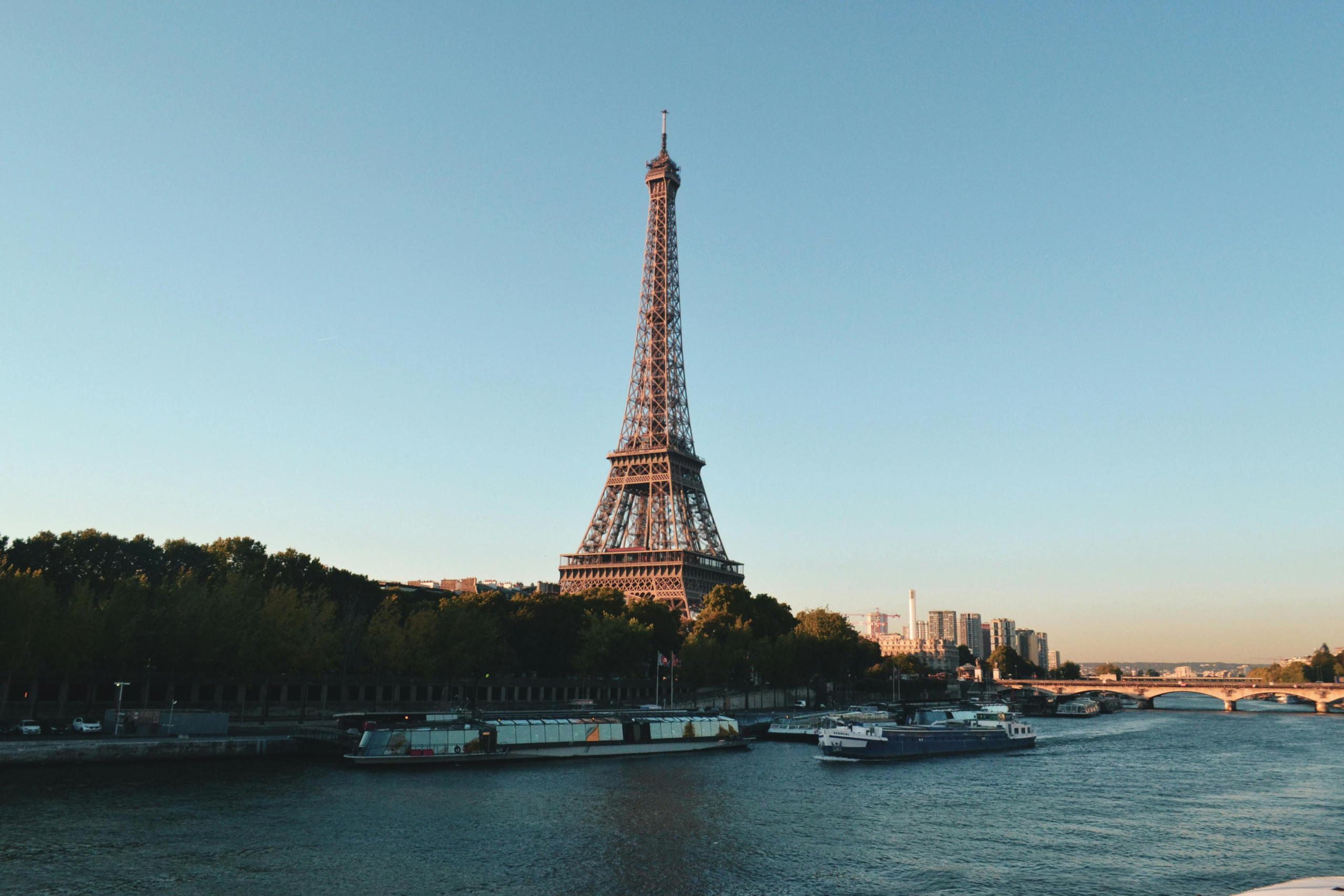
Built by Gustave Eiffel for the 1889 World’s Fair, the Iron Lady stands 330 metres tall and welcomes around 7 million visitors a year. By day or night, when it bursts into light every hour on the hour, it remains the defining symbol of Paris. The place du Trocadéro, directly across the Seine, offers the most photographed Eiffel Tower views in the world. For sunset views of Paris, this is arguably the finest vantage point in the city. Skip-the-line tickets are strongly recommended to avoid hours of queuing.
The Louvre and Its Pyramid
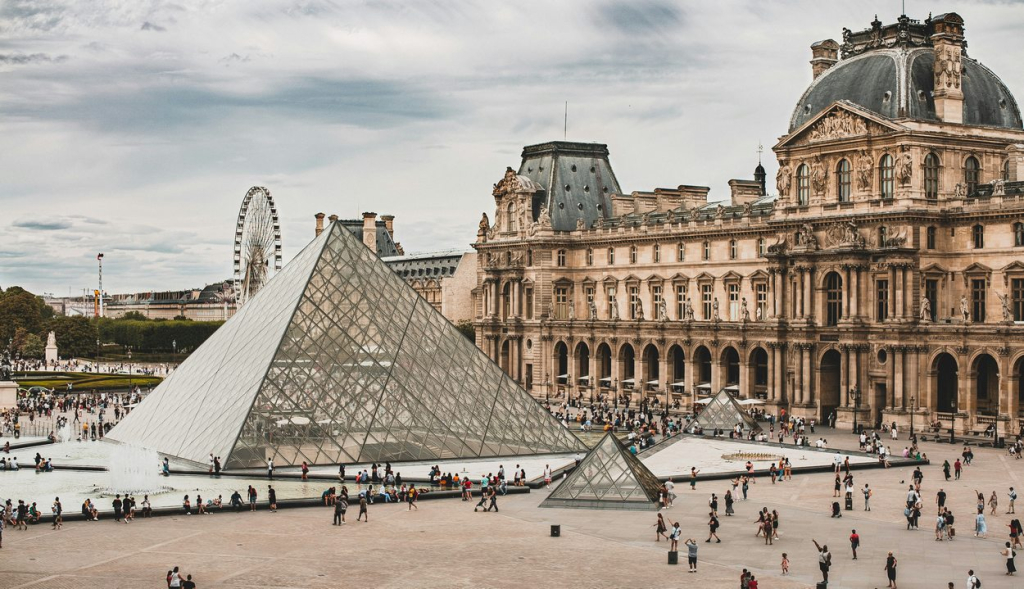
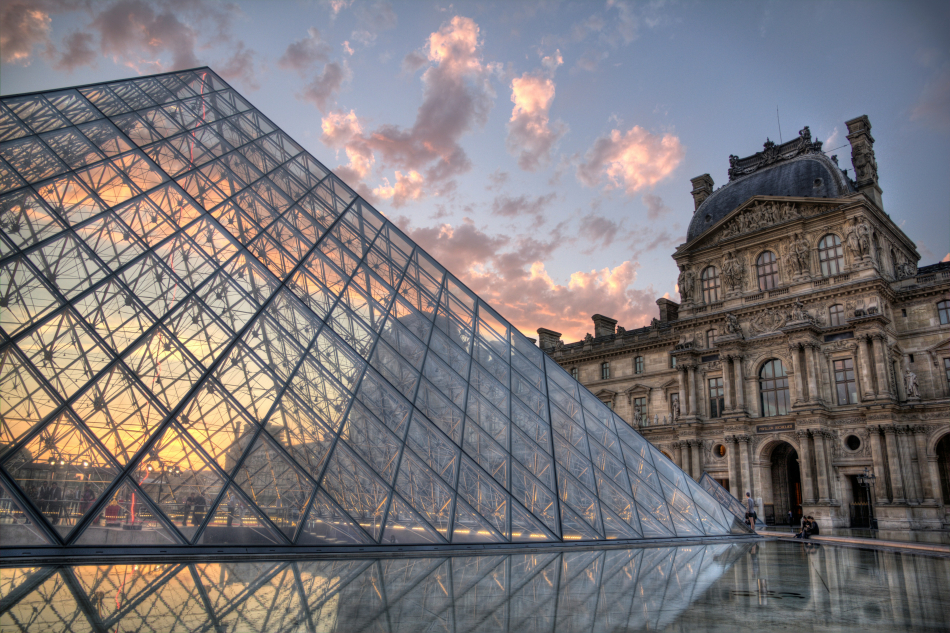
The Louvre museum and its pyramid in Paris
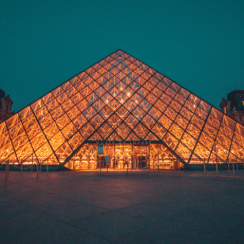
The world’s largest art museum spans 72,735 m² and houses 73,000 works, including the Mona Lisa, the Venus de Milo, and the Winged Victory of Samothrace. The glass pyramid, designed by I.M. Pei and opened in 1989, serves as the main entrance and stands as a landmark of contemporary architecture in its own right. The Egyptian collection ranks among the finest in the world. Arriving at opening time is the best strategy for beating the crowds; visitors under 26 enter free on the first Friday evening of the month. The Louvre is simply the most important art museum in Paris, and no trip to Paris is complete without it.
The Arc de Triomphe and the Champs-Élysées
Commissioned by Napoleon in 1806 and completed in 1836, the Arc de Triomphe rises at the centre of the place de l’Étoile, from which 12 avenues radiate outward. Climbing the 284 steps to the top rewards you with a sweeping 360-degree panorama stretching along the grand axis from the top of the arc back toward the Louvre. The Flame of the Unknown Soldier, rekindled every evening since 1923, gives the site a profound memorial dimension.
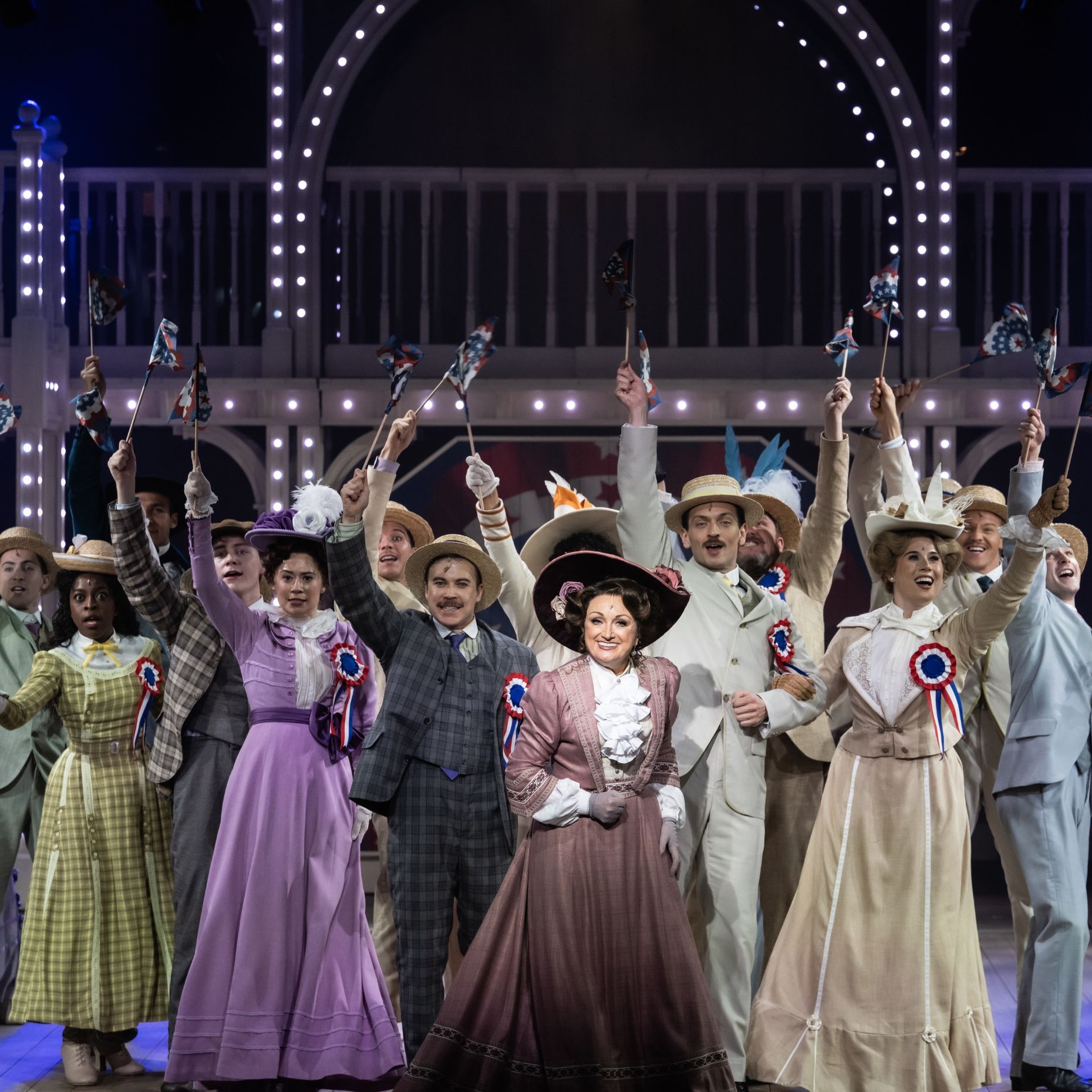
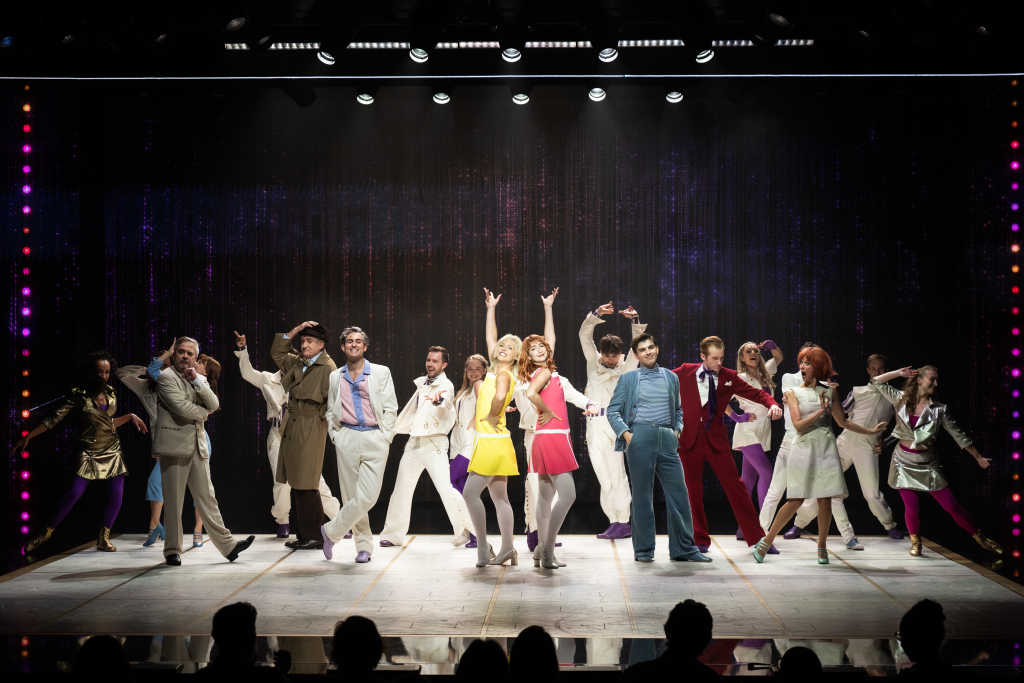
A few steps from the Arc de Triomphe, the Théâtre du Lido has embodied the art of Parisian entertainment at its finest since 1946. Nestled in the heart of the Champs-Élysées, this legendary cabaret has welcomed the biggest international stars and continues to keep the French music-hall tradition alive through lavish productions combining dance, light, and stagecraft.
Île de la Cité: Sainte-Chapelle and the Conciergerie
The Île de la Cité is the historic heart of Paris and one of the most rewarding places to visit in the city. The Sainte-Chapelle, built at the request of King Louis IX to house relics of the Passion, features 600 m² of 13th-century stained glass windows, among the most extraordinary examples of Gothic art anywhere in the world. Each panel filters light into hundreds of shades of red and blue, turning the vaulted ceiling into a jewel box of colour. Just steps away, the Conciergerie, the former royal residence turned Revolutionary prison, preserves the cell of Marie-Antoinette. Both sites are accessible with a combined ticket. While you are on the Île de la Cité, make sure to visit Notre Dame de Paris: after years of restoration following the 2019 fire, the cathedral has reopened its doors and stands once again as one of the most breathtaking Gothic landmarks in the world.
Montmartre and the Sacré-Cœur Basilica
Montmartre embodies the bohemian, romantic Paris of the 19th-century. Perched 130 metres above the city, this arrondissement is home to the Sacré-Cœur basilica, consecrated in 1919 on the highest point in Paris, its white silhouette visible from across the capital. The cobbled streets, the historic cabarets, and the place du Tertre, where artists still display their canvases under open sky, create an atmosphere that feels untouched by time. The funicular or the 222-step staircase both lead to the top, delivering exceptional sunset views of Paris. Montmartre is best explored on foot, with no reservation needed; every corner reveals another facet of old Paris. Don’t leave without stopping at a café along the way.
The Pont Alexandre III and the Banks of the Seine
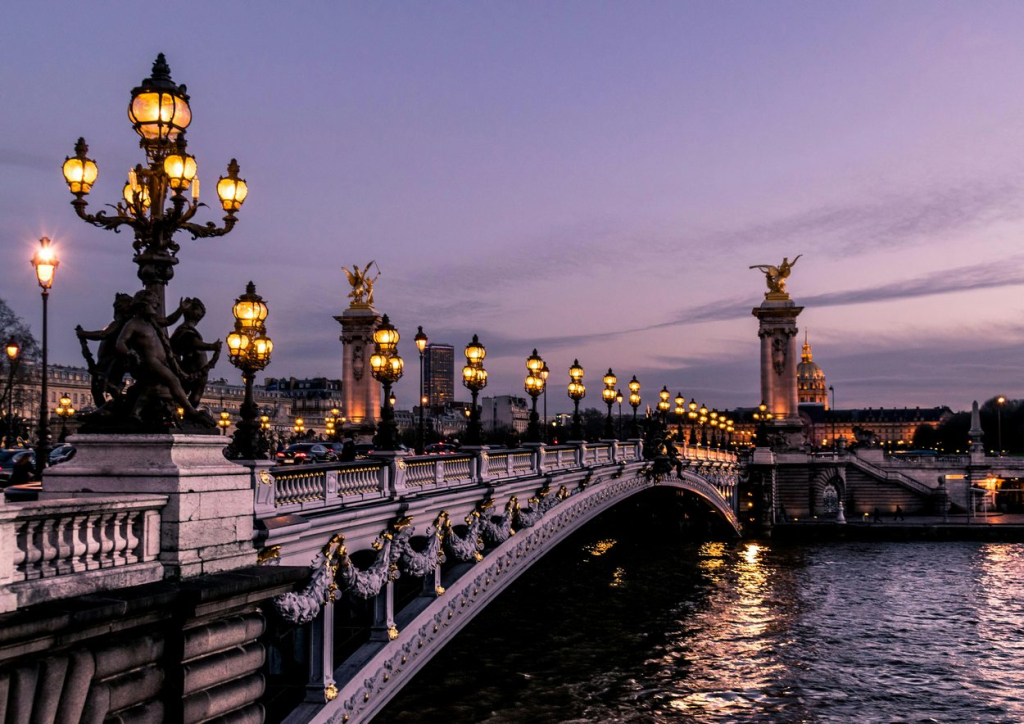
The Alexander III Bridge in Paris
The Pont Alexandre III, built for the 1900 World’s Fair, connects the Grand Palais to Les Invalides in a single 107-metre arch. Its gilded ornaments and Belle Époque lamp posts make it one of the most beautiful bridges in the city. Along the Seine, particularly between the Pont des Arts and Notre-Dame, the riverbanks offer some of the finest strolls in Paris: second-hand booksellers, street artists, and the quiet pleasure of walking beside the river Seine at golden hour. Taking a cruise on a bateaux-mouches gives a unique perspective on both banks, with unobstructed views of the Iron Lady and a fresh look at the bridges and riverside gardens. The Seine is, quite simply, the soul of Parisian life.
A Panoramic View from the Tour Montparnasse
Temporary closure: The Tour Montparnasse observation deck is currently closed to visitors due to renovation work. It is expected to remain closed for several years, so check the official website for the latest reopening information before planning a visit.
Built in 1973, the Tour Montparnasse rises 209 metres and offers a 56th-floor panoramic terrace. Unlike the Eiffel Tower itself, it gives you the rare pleasure of seeing the Eiffel Tower from above and at a distance, fully integrated into the urban landscape. On a clear day, views extend up to 80 kilometres. Queues here are shorter than at most other Paris attractions, making it one of the most efficient places to visit for anyone building a tight itinerary.
Parks in Paris: Parc des Buttes-Chaumont and Jardin du Luxembourg
Paris is not only about monuments. The Parc des Buttes-Chaumont, created in 1867 on the site of former quarries, surprises with its dramatic topography: artificial cliffs, a lake, and suspension bridges that feel nothing like a conventional park. Further south, the Jardin du Luxembourg is one of the most beloved parks in Paris: tree-lined allées, formal flowerbeds, the famous central basin, and a calm that makes it equally popular with locals and visitors. Both parks are perfect for a picnic, one of the great simple pleasures of any time in Paris.
Everything You Need to Know About the Most Beautiful Places in Paris
Here are answers to the most common questions for planning your visit, with practical information on access, pricing and opening times.
-
The Louvre offers several free-entry schemes depending on age and date. The Jardin du Luxembourg, the banks of the Seine, Montmartre, and the Pont Alexandre III are all free at any time.
-
Yes, for the Eiffel Tower, the Louvre, and the Arc de Triomphe. Skip-the-line tickets are essential in high season (April to September). The Sainte-Chapelle and the Conciergerie also offer skip-the-line options. Montmartre and the Jardin du Luxembourg require no booking.
-
May, June, September, and October offer ideal weather and smaller crowds than July and August. The parks, particularly the Jardin du Luxembourg and the Tuileries, are at their best in spring and autumn. Sunsets from the Eiffel Tower or Montmartre are especially spectacular in the late afternoon. To round off your evening, check the programme at the Théâtre du Lido and book your tickets in advance for an unforgettable Parisian night out.
-
Three to four days cover all the sites comfortably. Two days can work for first-timers focused on the headline attractions. A full week allows you to explore multiple arrondissements at a leisurely pace, and to discover what most visitors in a hurry miss entirely.
Ces articles pourraient aussi vous interesser
-

What to Do in 3 Days in Paris? Our Perfect Itinerary
Paris, the City of Light and the world capital of arts, reveals itself with intense brilliance through an itinerary blending iconic monuments and the jewels of musical theater. Here is our…
More info -
Looking for shows in Paris? Here is our selection!
Forget the routine: Paris, the City of Light, is a permanent theater ready to enchant you.
More info -
What Are the Different Theatrical Genres and Their Definitions?
Discover the different theatrical genres and styles, from tragedy to farce. Explore their history, key characteristics, and impact on modern theater.
More info